
Gaining Weight in Your 40s? Here’s Why
Gaining weight or noticing changes in your body shape during your 40s? You’re not imagining it. Discover why muscle, hormones, sleep and lifestyle can all influence body composition during midlife - and what you can do to support a stronger, healthier body as you move through the menopause transition.
WOMEN'S HEALTH

Gaining Weight in Your 40s? Here’s Why
You’re eating reasonably well. You’re exercising. You haven’t suddenly started living on takeaways and biscuits. And yet… your jeans feel tighter.
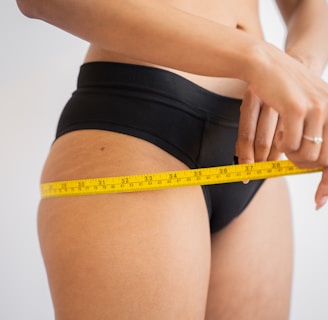
Perhaps, the scales have slowly crept upwards, or maybe your weight hasn't changed much but your body shape has. More around your middle, less definition around your waist, and a frustrating feeling - what used to work doesn't seem to work anymore.
If this sounds familiar, you're not alone.
Weight and body-composition changes are common during midlife, particularly around the menopause transition. But before blaming everything on a “slowing metabolism”, there’s a little more to the story.
Your metabolism hasn't suddenly broken
You've probably heard that your metabolism starts slowing dramatically when you reach 40.
It sounds credible, but the science isn't quite that simple.
One study that looked at how our energy needs change throughout life found, that once body size and composition were considered, energy expenditure stayed fairly steady from our 20s through to around age 60 (1).
So, reaching 40 doesn't mean your metabolism suddenly switches into “slow mode”.
Instead, several smaller changes can start adding up, including changes in muscle, hormones, activity, sleep and appetite.
And one of the biggest pieces of the puzzle is muscle!
It’s not just about weight, it’s about what makes up that weight
During the menopause transition, your body can start changing even if your diet hasn't changed dramatically.
Studies following women through this stage of life have found that body fat tends to increase while muscle mass can gradually decrease (2).
This means you might not see a huge difference on the scales, but you may notice that your clothes fit differently or that you're carrying more weight around your middle.
And there's another change that many women notice.
As oestrogen levels change during the menopause transition, fat can start to be stored differently, with more tending to settle around the abdomen rather than the hips and thighs (3).
So, if you're thinking, “Why is my tummy suddenly where I notice it most?” - there is a biological reason for that.
This is where strength training becomes important
If your exercise routine has always been mostly walking, running, cycling or other cardio, your 40s are a good time to think about adding some resistance training.
Studies have shown that strength training can help women maintain or build muscle, while also helping to improve body composition and strength (4).
And you don't need to spend hours in the gym.
Weights, resistance bands, bodyweight exercises and anything else that makes your muscles work harder all count.
The UK guidelines recommend doing muscle-strengthening activities at least two days a week (5).
The goal isn't simply to burn calories. You're giving your body a reason to keep the muscle you want to keep.
And what about protein?
Protein has become a huge topic in midlife nutrition, and there is a good reason for it.
As we get older, keeping hold of our muscle becomes increasingly important. Studies have found that getting enough protein can help support muscle when it's combined with resistance exercise (6).
But this doesn't mean you need to eat enormous amounts of protein or have a protein shake after every workout.
For most people, a much simpler approach is to make sure your meals contain a good source of protein, such as eggs, Greek yoghurt, fish, chicken, tofu, tempeh, beans, lentils or cottage cheese.
It's the combination of protein and giving your muscles a reason to use it that really matters.
Don't underestimate sleep
Sleep can also become more complicated during your 40s.
Perimenopause can bring night sweats, disrupted sleep and changes in sleep quality. The NHS lists sleep difficulties among the common symptoms of perimenopause and menopause (7).
And getting too little sleep doesn't make healthy habits any easier.
Research has found that people who regularly get less sleep tend to have a higher risk of weight gain (8) Of course, this doesn't mean that if you sleep more, the weight will magically disappear.
But, if you're exhausted, hungry all the time and struggling to find the energy to exercise, it's worth looking at your sleep rather than simply trying to eat less.
Sometimes the answer isn't another diet. It's better sleep.
What about hormones?
Hormones absolutely have a role in the changes happening during midlife, but social media often makes their role sound much simpler than it really is.
You may have heard about “cortisol belly”, for example, or claims that declining oestrogen is solely responsible for weight gain.
The reality is more complicated.
The menopause transition can influence where your body stores fat, while changes in sleep, appetite, activity and muscle can happen at the same time.
So rather than looking for one hormone, food or supplement to blame, it makes more sense to look at the bigger picture.
So, what can you actually do?
You probably don't need a completely new diet.
Instead, think about supporting your changing body rather than fighting it.
1. Include protein regularly
Build meals around a good source of protein and vary your sources throughout the week.
2. Strength train
Aim for at least two sessions a week and gradually challenge your muscles.
3. Keep moving
Walking, cycling, gardening, taking the stairs and simply spending less time sitting all contribute to your overall activity.
4. Eat plenty of plants and fibre
Vegetables, fruit, wholegrains, beans, lentils, nuts and seeds provide fibre and a wide range of nutrients that support overall health and gut health.
5. Take sleep seriously
If perimenopause is disrupting your sleep, don't simply accept poor sleep as something you have to live with. Speak to your GP or another appropriately qualified healthcare professional about your options.
6. Look beyond the scales
Your waist measurement, strength, fitness, energy, sleep and metabolic health can tell you much more about your health than your weight alone.
The Healthy Habits takeaway
Gaining weight in your 40s doesn't mean you've suddenly lost control of your diet, and it doesn't necessarily mean your metabolism has “broken”.
Your body is changing.
The menopause transition can influence fat distribution and body composition, while muscle, sleep, activity and nutrition all play a role.
Rather than responding with a harsher diet or endless cardio, this can be a good time to change the question from:
“How can I make myself smaller?”
to:
“How can I stay strong, healthy and well-nourished as my body changes?”
That shift can make a much bigger difference than chasing the latest weight-loss trend.
This article is for general educational purposes and does not replace individual medical or nutritional advice. If you experience sudden or unexplained changes in weight, or have concerns about your health, speak with an appropriately qualified healthcare professional.
References:
1. Pontzer et al. (2021) Daily energy expenditure through the human life course. Science. 373(6556):808-812.
2. Greendale et al. (2019) Changes in body composition and weight during the menopause transition. JCI Insight. 4(5) :e124865.
3. Jiawen et al. (2025) The Impact of Estrogen Deficiency on Liver Metabolism: Implications for Hormone Replacement Therapy, Endocrine Reviews, 46(6) 790–809.
4. Khalafi et al. (2023) The effects of exercise training on body composition in postmenopausal women: a systematic review and meta-analysis. Front Endocrinol (Lausanne). 14:1183765.
5. UK Chief Medical Officers (2026). UK Chief Medical Officers’ physical activity guidelines. Department of Health and Social Care. [Online] Available at: https://www.gov.uk/government/publications/physical-activity-guidelines-uk-chief-medical-officers-report
6. Kirwan et al. (2022) Protein interventions augment the effect of resistance exercise on appendicular lean mass and handgrip strength in older adults: a systematic review and meta-analysis of randomized controlled trials. Am J Clin Nutr. 115(3):897-913.
7. NHS (2026). Symptoms of menopause and perimenopause. NHS. [online] Available at: https://www.nhs.uk/conditions/menopause-and-perimenopause/symptoms/
8. Patel, S.R., Hu, F.B. (2008) Short sleep duration and weight gain: a systematic review. Obesity (Silver Spring). 16(3):643-53.
Clinic
Online consultations worldwide
gabriella@healthyhabitsnutrition.co.uk


Healthy Habits Nutritional Therapy
Evidence-informed nutrition
© 2026 Healthy Habits Nutritional Therapy-Registered Nutritional Therapist offering personalized 1:1 care.